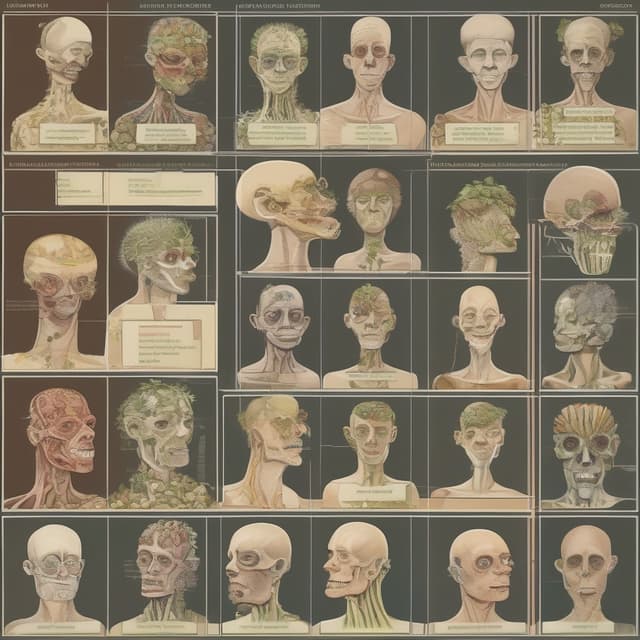
| Time period | Alternate evolutionary timeline |
| Key differences | Predominantly plant-based diet • Larger brain size and cognitive capabilities • Digestive system better adapted to processing plant matter • Accelerated development of tools and technology |
| Cultural and social evolution | Substantially different from our own timeline |
| Divergence from main timeline | Around 2 million years ago |
In the history of human evolution, the development of our large, complex brains is closely tied to the dietary shifts our ancestors underwent over millions of years. However, in this alternate timeline, the co-evolution of the human brain and our food sources has played out quite differently from the path taken in our own reality.
Whereas in our timeline the earliest hominids like Australopithecus had relatively small brains only slightly larger than those of their chimpanzee cousins, in this alternate world their brain sizes were significantly larger from a much earlier period. Fossil evidence suggests that by around 2 million years ago, hominid species like Homo habilis and Homo erectus had brains 50-100% larger than their counterparts in our timeline.
Researchers believe this accelerated brain expansion was driven by a more diverse, nutrient-rich diet that these early humans were able to access. Rather than relying primarily on scavenging and occasional hunting like our ancestors, the hominids of this world had evolved adaptations allowing them to more efficiently process and obtain sustenance from a wide variety of plant foods - including tough, fibrous plants that earlier hominids likely couldn't fully utilize.
The transition to a predominantly plant-based diet occurred much earlier in this alternate timeline, taking place as early as 2 million years ago rather than the 1 million years ago that marks the shift in our own history. This dietary change, facilitated by anatomical adaptations like larger molars and more efficient digestive systems, had profound effects.
With access to a reliable, nutrient-dense food supply from plants, hominids were able to devote more energy towards brain development and the elaboration of cognitive faculties. This in turn drove the emergence of more advanced tool use, social organization, and other hallmarks of increasing intelligence. By 1 million years ago, species like Homo ergaster had brains 30-50% larger than their counterparts in our timeline.
One of the key differences in this alternate timeline is the absence of a significant meat-eating phase in human evolution. Rather than transitioning to an omnivorous or carnivorous diet rich in animal proteins and fats, these hominids remained primarily herbivorous throughout their history.
As a result, the human species that eventually emerged - let's call them Homo botanicus - possess a very different anatomy and physiology compared to Homo sapiens. Their digestive system is more akin to that of modern herbivores, with adaptations like enlarged cecums and colons to better process fibrous plant matter. Their teeth and jaws are also less suited for tearing and masticating tough meats.
The lack of a meat-eating past has also had profound impacts on the cultural and social evolution of Homo botanicus societies. Without the need to organize large-scale hunting parties or distribute animal carcasses, their social structures likely emphasized different forms of coordination and resource sharing.
Technological development may have also proceeded along different pathways, with less focus on weapons and tools for hunting, butchering and preserving meats. Instead, Homo botanicus cultures may have placed greater emphasis on processing, storing and distributing plant foods, as well as technologies related to agriculture, horticulture and land management.
Morally and ethically, the absence of a meat-eating tradition means these humans likely have very different attitudes and beliefs around the use of animals. Practices like animal domestication, factory farming, and even recreational hunting may be seen as abhorrent in their societies. Their environmental ethics and relationship to the natural world have likely also diverged substantially from our own.
In the end, while the basic evolutionary path of the human brain may be similar, the dietary and cultural trajectories of this alternate timeline have created a human species remarkably different from the Homo sapiens we know. Understanding these divergences provides valuable perspective on the profound impact that seemingly small differences in ecology and behavior can have on the long-term course of evolution.
